Eggs, rooms, puzzles, and talking about AI
I live with five friends in a big house, and two things I’ve done in it on this particular Sunday are hide 156 easter eggs all around, and reach a tentative joint decision on the allocation of four of its rooms.
These tasks are delightful to me for a reason they have in common, and from which I hope to gesture at extremely far reaching conclusions.
Easter eggs
A room usually seems like a simple thing to me—a big box, with some smaller mostly boxish objects and holes in it. Each of those things also usually seems simple: a cupboard is a box-shaped hole, with a movable thin-box-shaped front, which has hinges (the most complicated part, but in this picture their only qualities are letting flat surfaces rotate around fixed edges). Sometimes a cupboard has shelves, which are like planes breaking up the space.
In this picture, hiding easter eggs well is hard! Like, I could put one in the cupboard? On the top shelf? Or the bottom shelf! They’ll never find it there!
These are not good hiding places.
In order to hide easter eggs well, you need to see a lot of detail that you were abstracting away in the simple picture. The weird ridge along the back of the cupboard, or a wire looping under a lip around the front, or brackets holding up the shelves that have spaces in them where something could be wedged, or a rogue curl of onion peel in a back corner.
Here is one of my favorite hiding spots—can you see the egg?
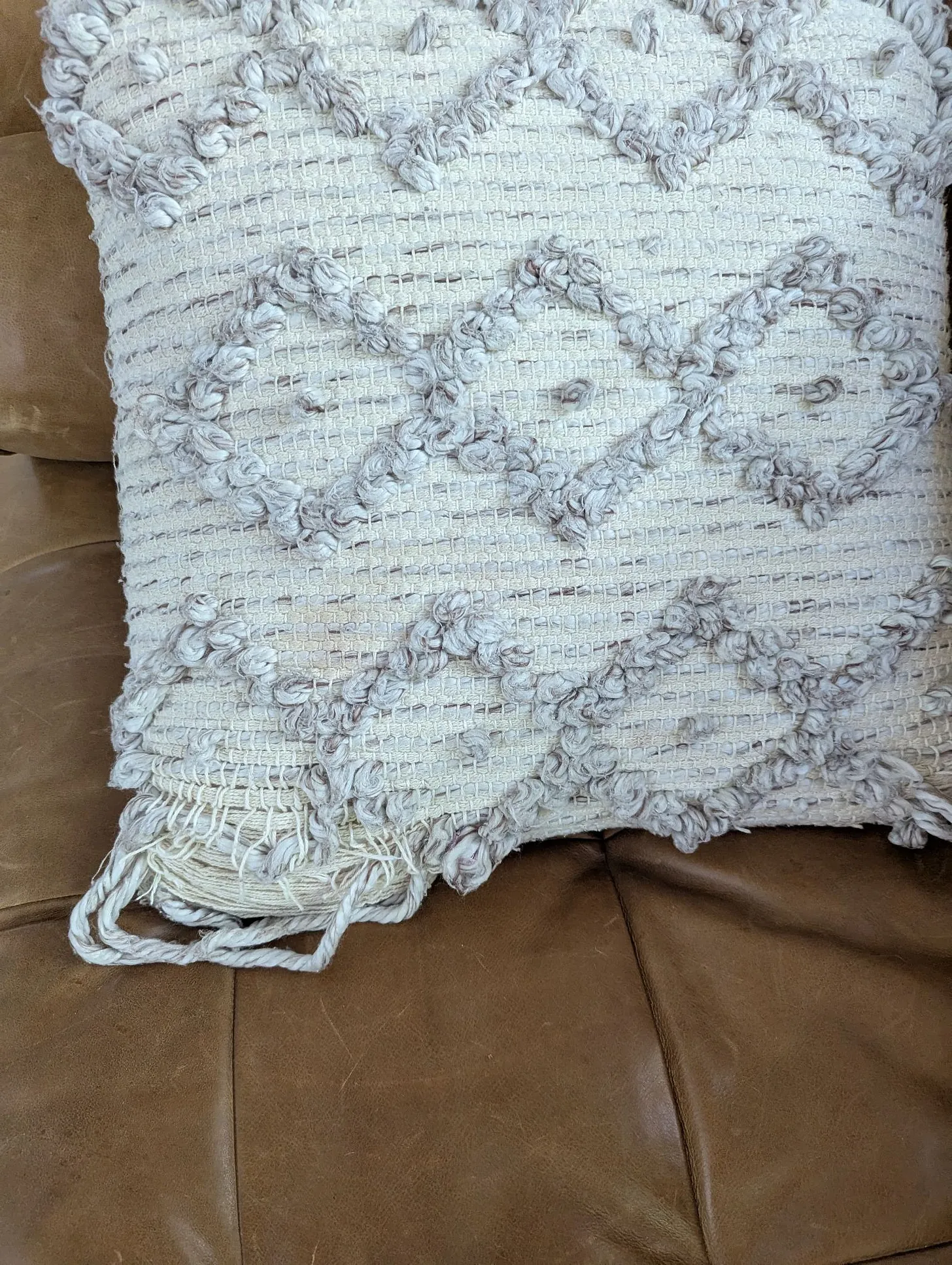
Answer below:
.
.
.
.
.
.
.
.
.
.
.
.


I like it because a cushion so much seems like an inflated square in my mind—yes, with some sort of pattern, and perhaps somewhat worn out, but I don’t expect a pattern + worn out = you can hide a substantial solid object on the surface of it.
Here is an especially empty room (one of the ones in need of allocation), currently known as ‘the puzzle room’:
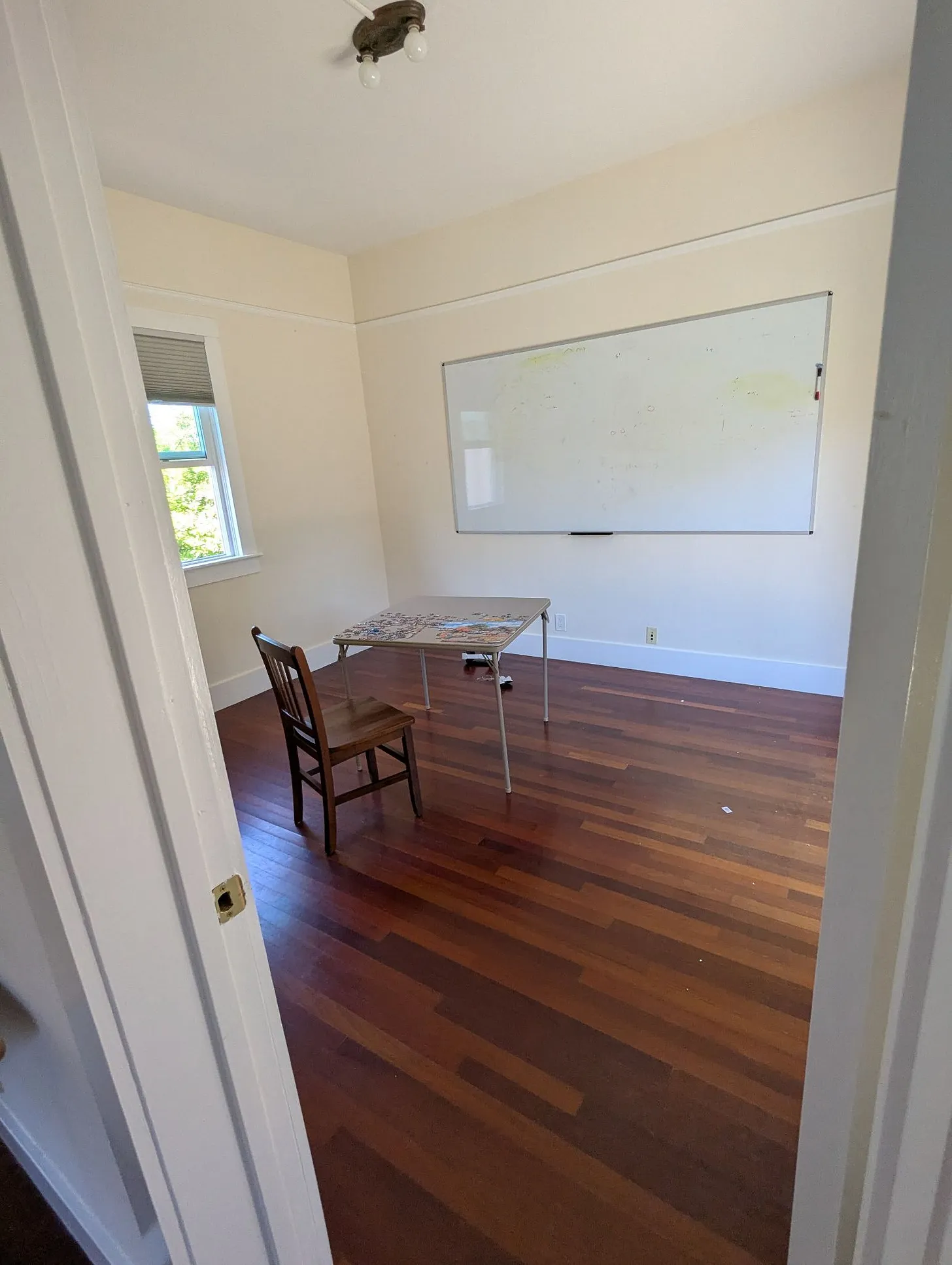
I hid ten eggs in it (probably two visible in this picture), and it took a while for people to find them all, which seemed to aggressively help some of the egg-seekers receive a similar experience of space containing details that are somehow really hard to see even if you try.
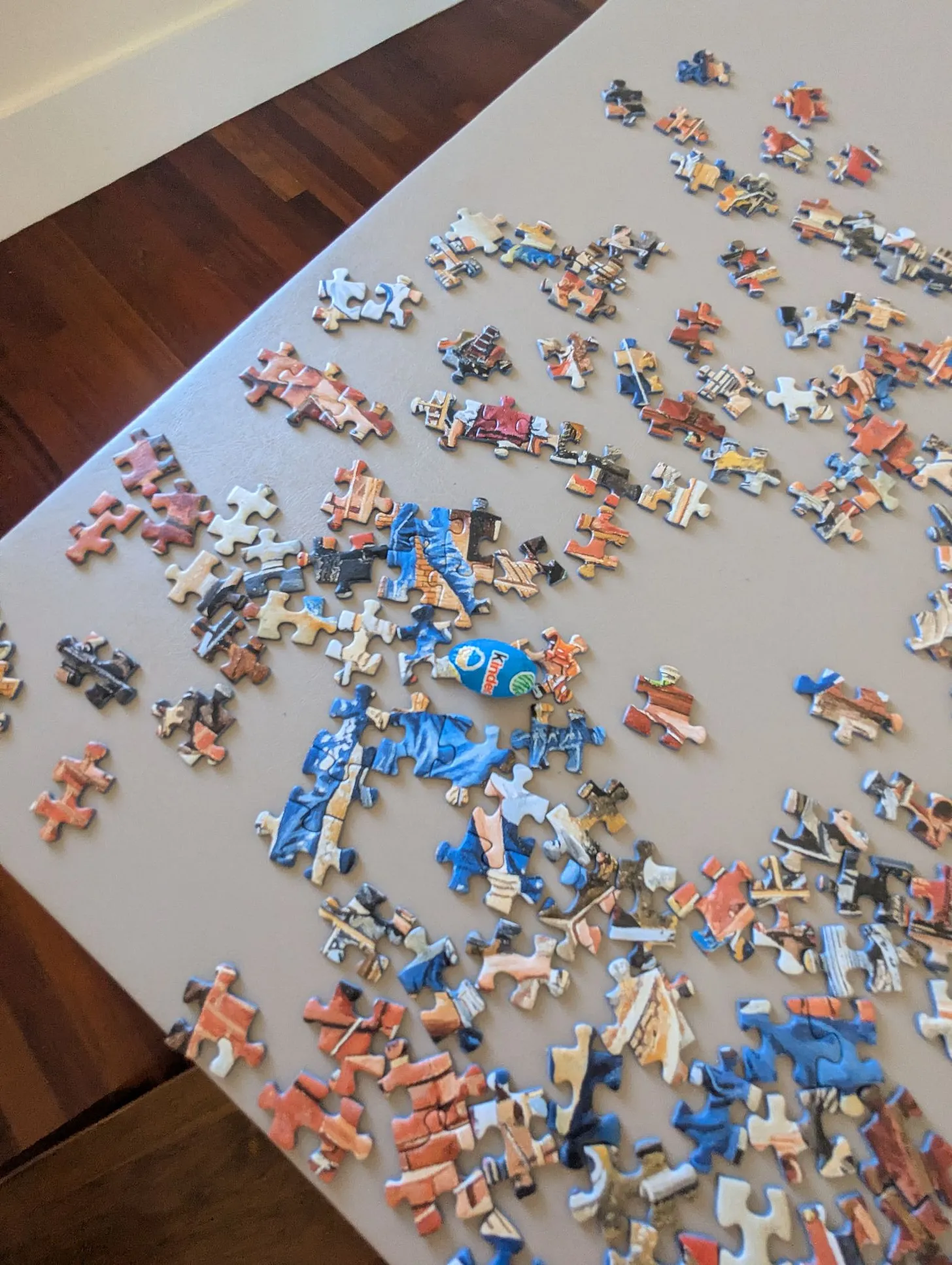
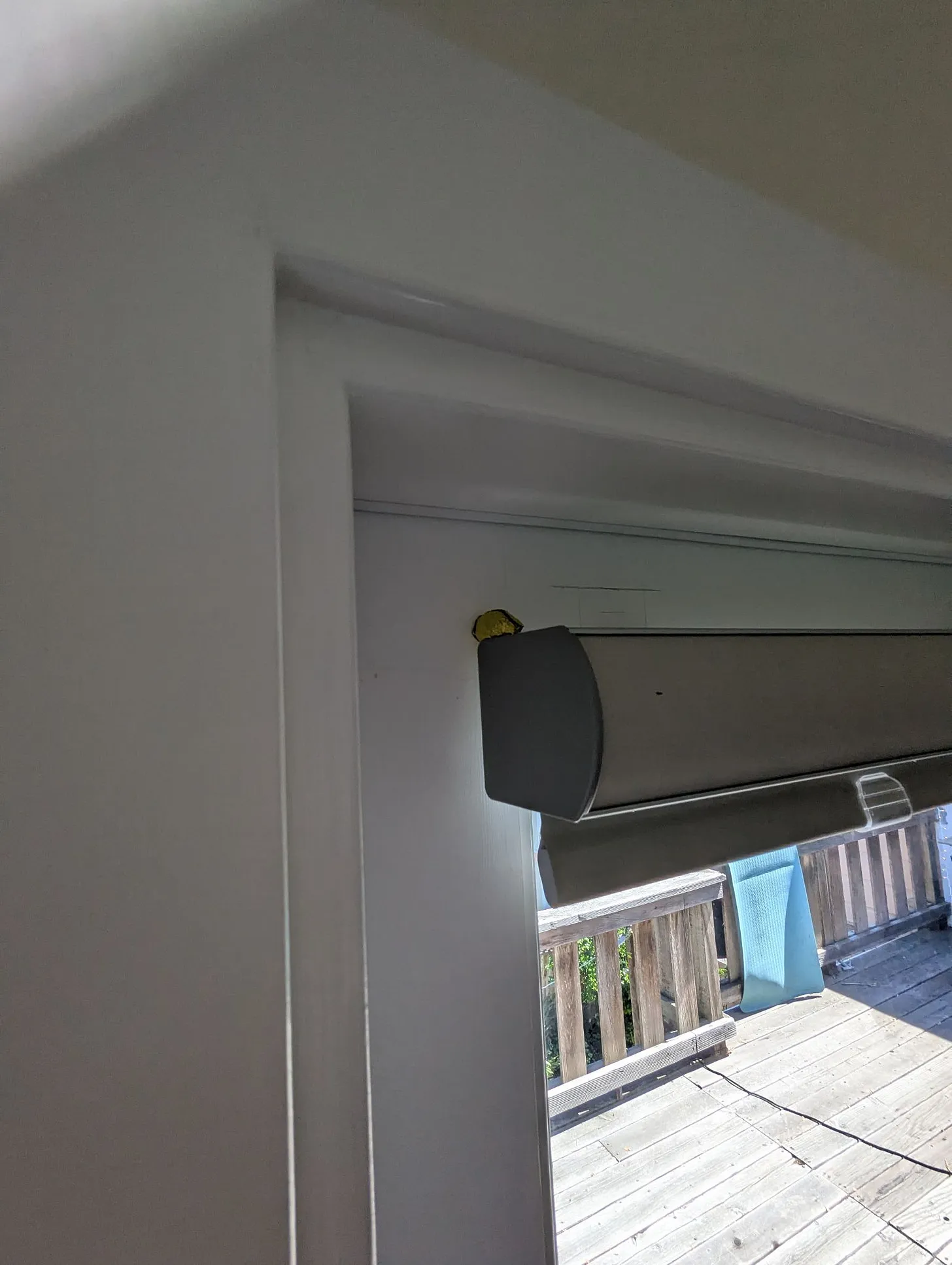
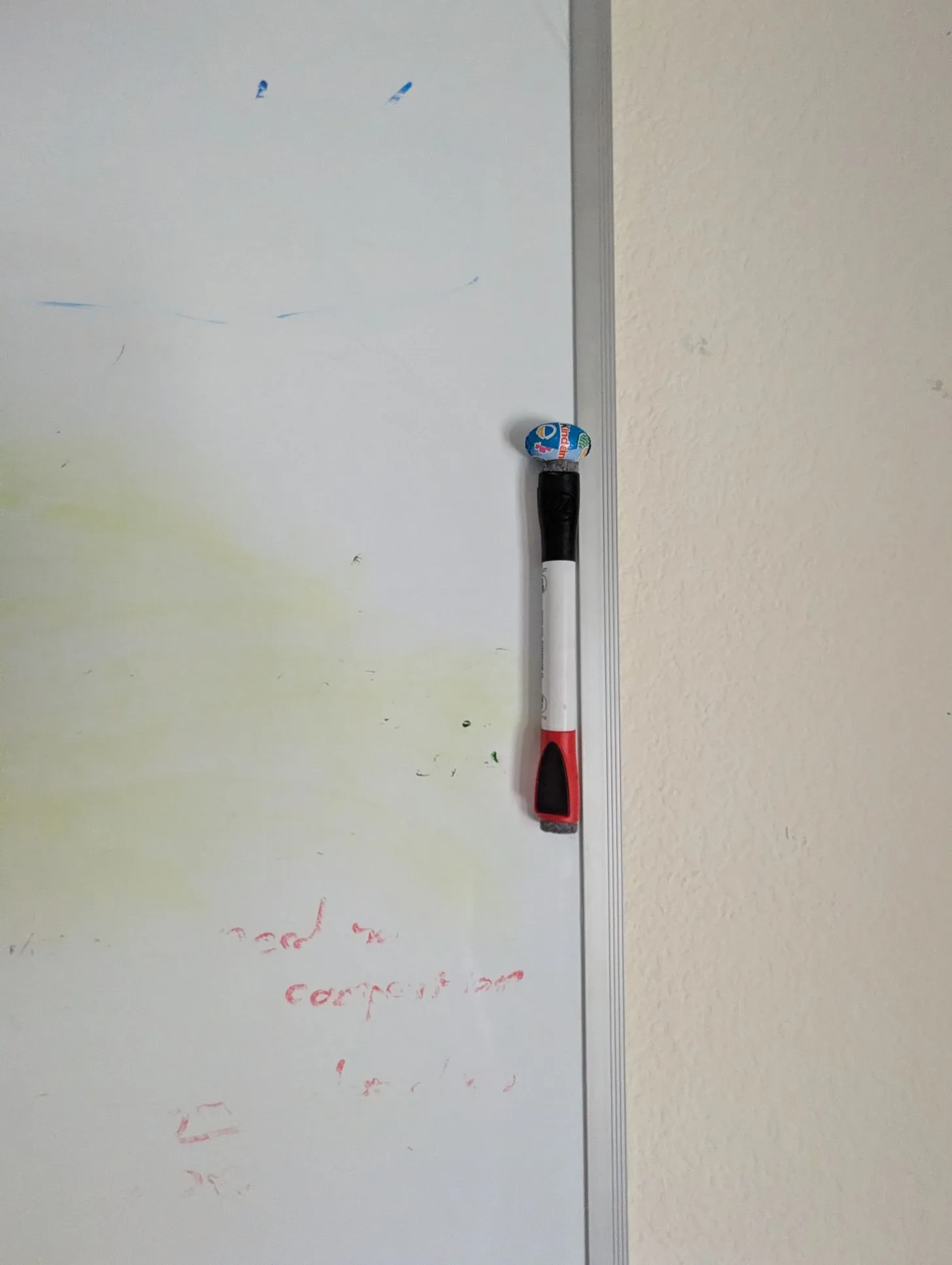
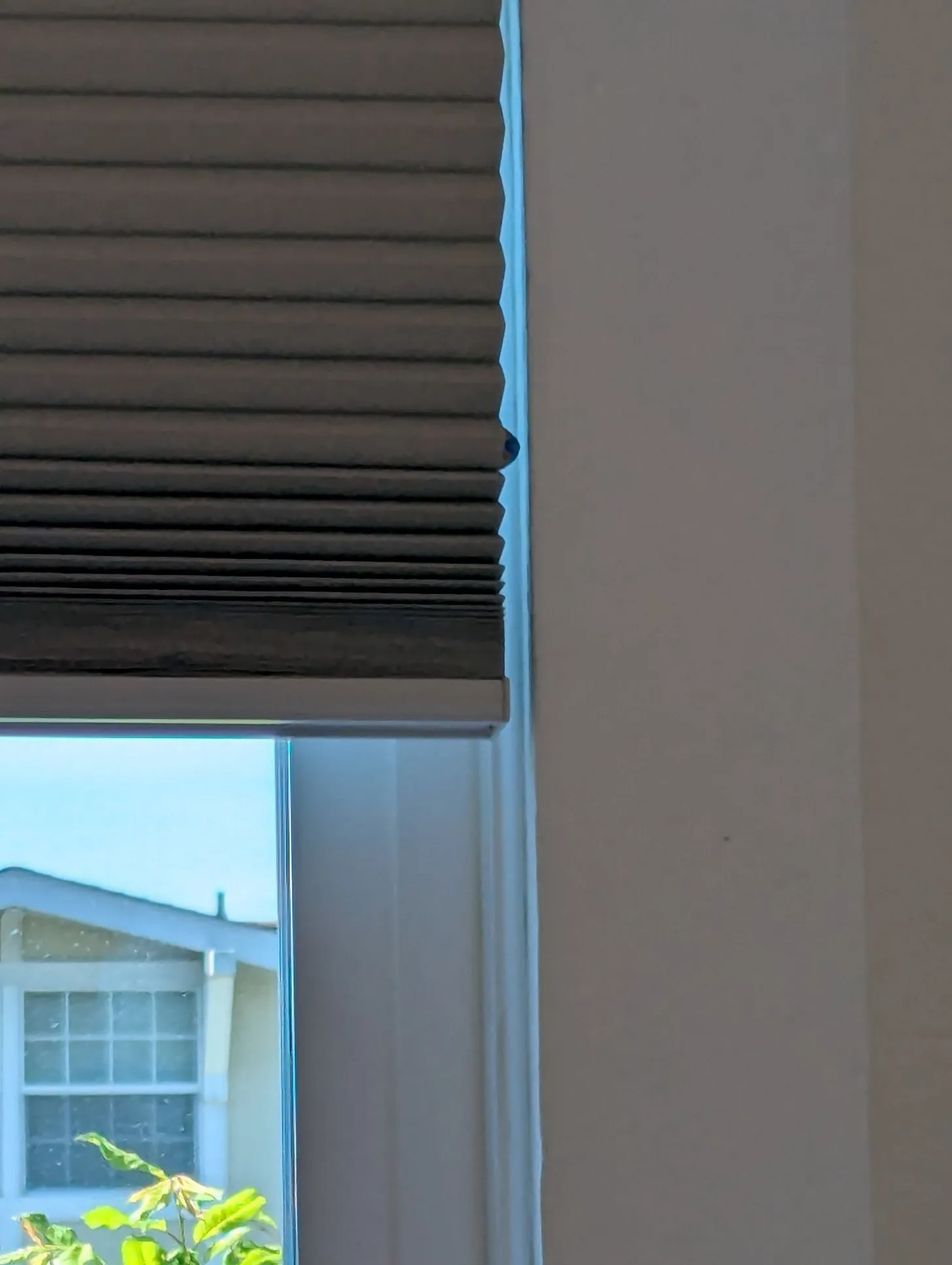
It would be one thing to have a kind of ‘level of detail dial’ that you could read and consciously turn up and down the level as you see fit. But an interesting thing about watching people search for easter eggs is that they can’t necessarily choose which things they are abstracting out, or fully tell how ‘carefully’ they are looking. You can put eggs in plain sight of them, and they think they are looking carefully, but just don’t see the egg. By the time a person has perceived anything at all, they have simplified it. You can’t just look at all the raw detail, and check it for eggs.
Besides not being able to control which abstractions you use, it seems to me now that an adversary (such as an egg-hider) can guess and exploit your habits of abstracting. Among the details of the cupboard, even if you are looking carefully at the shape of the sides, you might still miss the onion peel, because it’s random dirt, and you are examining the cupboard. That’s another nice thing about the ragged cushion—if you habitually round off worn-out things to what they are meant to be, it’s hard to see the detail of how it is falling apart, and thus the egg.
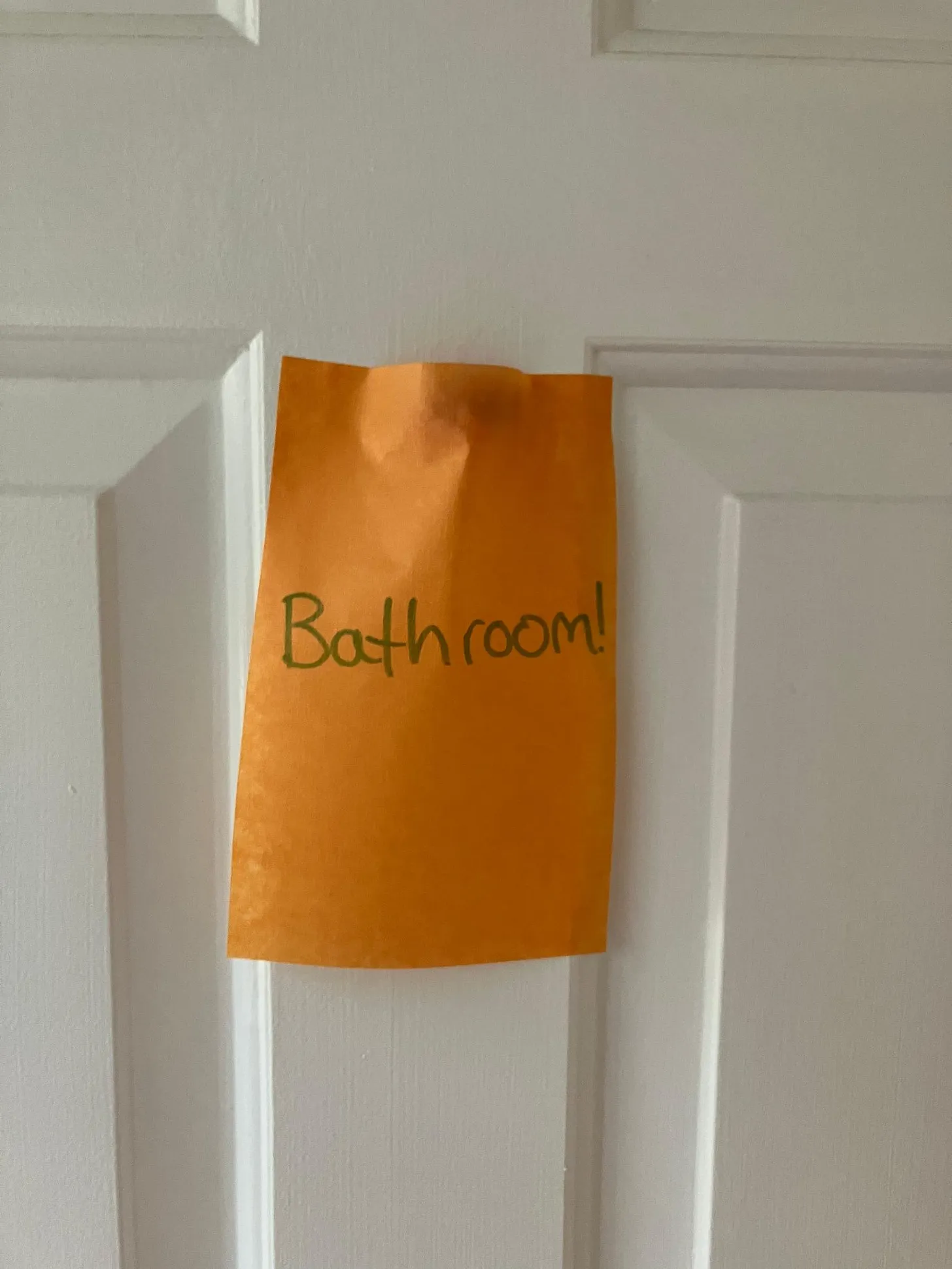
In another possible example, one of our bathrooms has a ‘bathroom!’ label on it, which I expect my housemates are used to seeing and ignoring, and visitors perhaps also tune out on their way to look for eggs inside what they have already determined to be a bathroom. I put an egg behind it, held by the super-post-it-note glue, which was a pretty unsubtle disruption to the smoothness of the sign, but this egg wasn’t found until it was accidentally knocked out at the very end.
Rooms
Allocating rooms seems like it should be a simple thing—there are only a few options! Like, if you have four rooms, and Alice and Bob each basically need a place to sleep and to work, then it seems like you should be able to consider the 24 possibilities and be done. But actually (at least in houses I live in) what exact spaces are the ‘rooms’ in question is often more ambiguous than you might think, and what set of activities will be expected or people will be owners also contains many more possibilities than I see at first.
I’m more confused about how this happens with rooms, but I have twice in this house had the experience of mulling over such a question for what seems like unreasonably long, and coming up with new ideas we hadn’t thought of or taken seriously, and ending up with a satisfactory arrangement. This time, our tentative plan involves one of the bedrooms also being a recording studio, and there being three total rooms with beds in among two people. Which all feels very simple in retrospect, but I have been haplessly ideating about this for weeks.
It again feels kind of magical and wholesome to stare at the simple things long enough and well enough to see them more richly, in ways that you couldn’t just choose to, and for this to solve your problem.
Classic puzzles
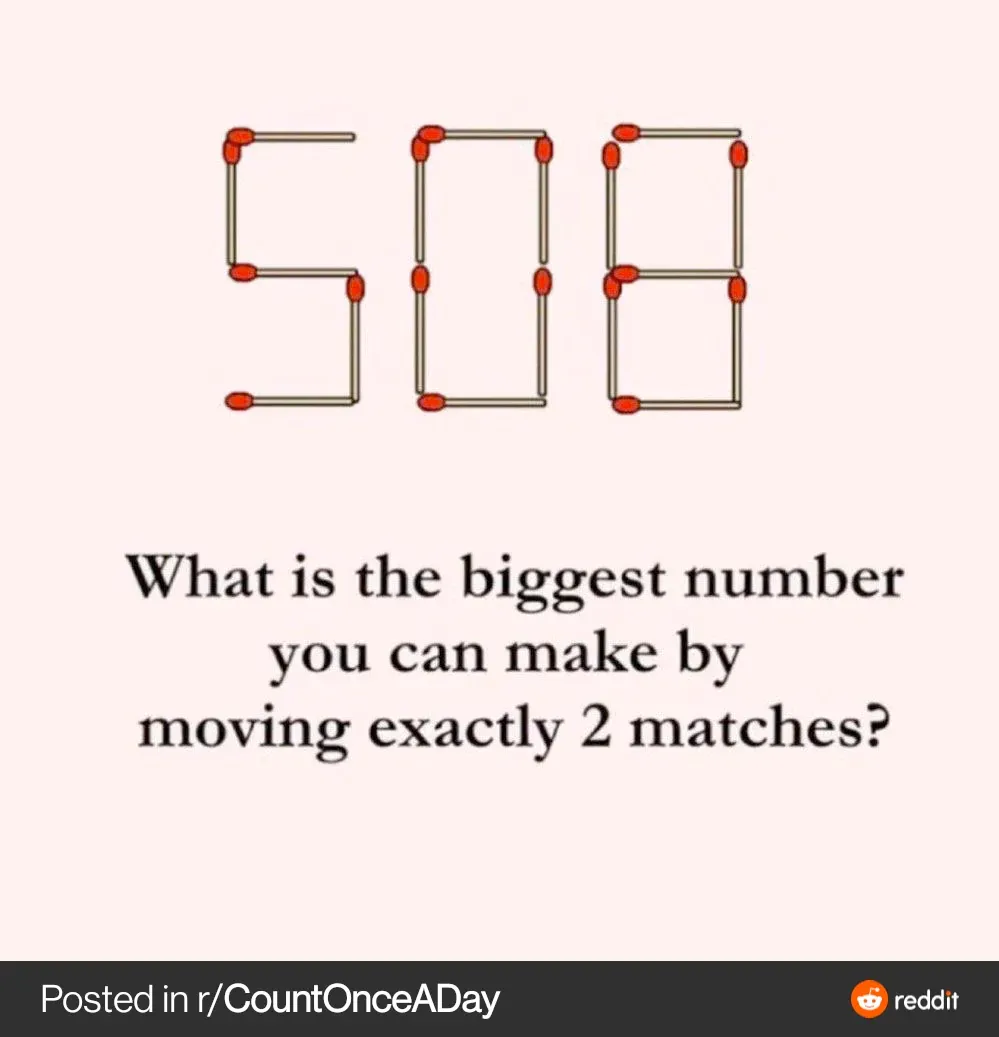
This kind of situation - an abstraction you take for granted that makes a problem hard, and gaps in the abstraction that let you do better, is a classic way to construct a puzzle. For instance (from Reddit):
AI risk
A thing that has annoyed me for a long time in talking to people about AI risk is that they often do it in very abstract terms—”we need safety progress relative to capabilities progress”, or “such and such will get a decisive strategic advantage and there will be value lockin”—and then expect to be correct, like pretty confidently!
I love abstractions quite a lot compared to most people (I once scored 100% on the relevant axis of the Myers-Briggs test!) but I’m also expecting abstractions to have relevant frayed edges all over the place. And this is particularly relevant if you are trying to solve problems and are struggling to see solutions.
In particular, for instance, I often hear that it is pointless or silly to try not to build really dangerous AI technology because “it’s a race”. But before you give up on preventing this disaster, I really want you to spend at least as much attention seeing the details of the world below the level of “arms race” than my boyfriend spent peering at our laundry machines before he found the egg there.